Effora
For home, family and work
How to keep a to-do list: One you actually finish
A good list is short, specific and speaks up at the right moment. Four rules and one exercise that finally make big tasks smaller.
Try to do everything and you often get nothing done
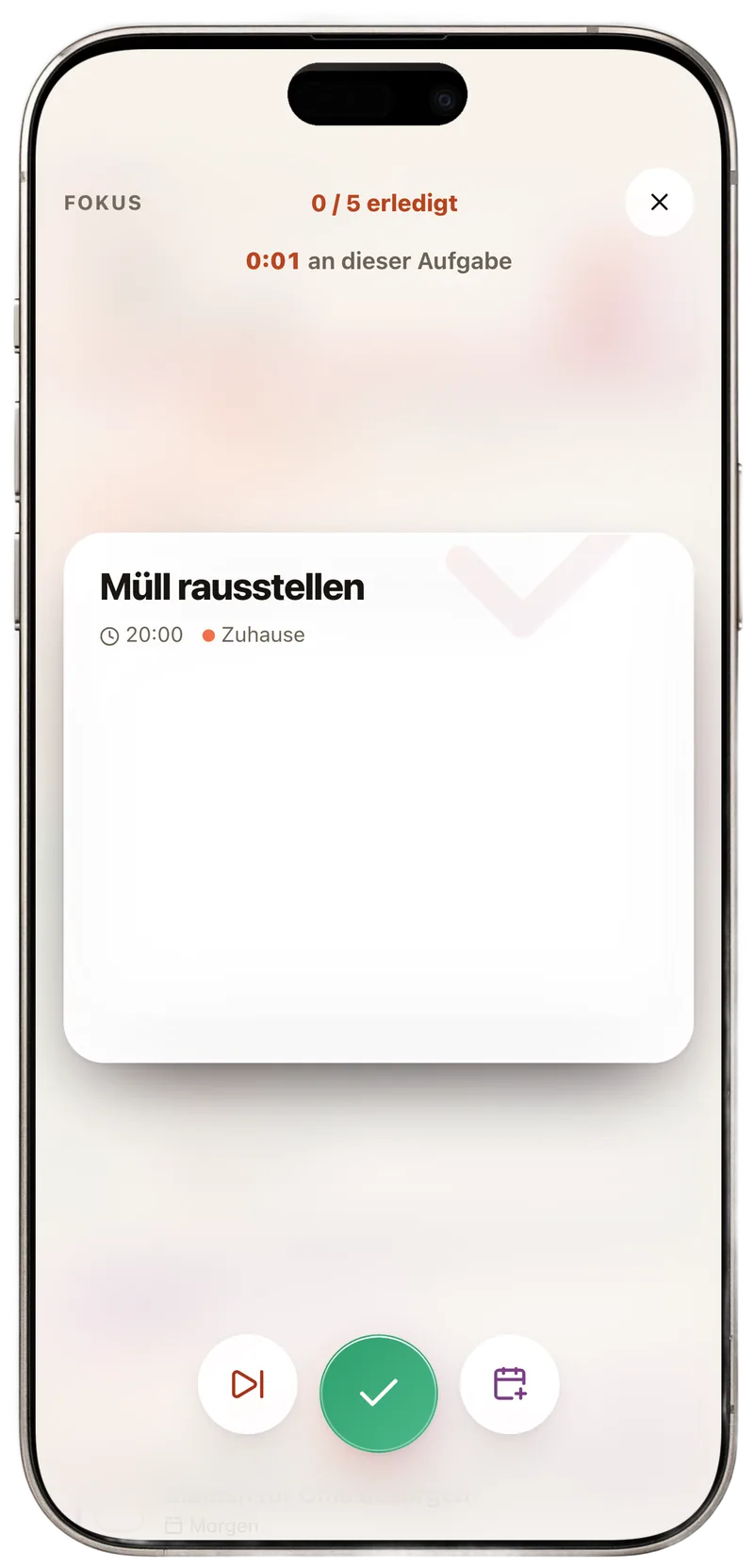
A list with twenty items for today is discouraging just to look at. Each morning, pick three tasks that really matter. Once they're done, it was a good day, no matter what else happens.
Why to-do lists usually fail
Not for lack of discipline, but because of the way the list is written.
Most common mistake
Too big
“Clean out the basement” isn't a step, it's a project. Items like that sit there for weeks because it's unclear where to start. The first step should be doable in a quarter of an hour, for example “take three boxes of waste paper to the recycling bin”.
Too vague
“Insurance” doesn't say what to do. A verb helps: call, cancel, find the paperwork.
Everything on one list
Groceries, work and birthdays all mixed up. Separate lists show only what fits right now.
No reminder at the right time
The best list is useless if you don't look at it. Some tasks need a time, others a place. How location reminders work is explained in the guide Location-based reminders.
Exercise: break down a big task
Write down a task that has been on your list for far too long. Then add steps until the first one can be done in a quarter of an hour. Nothing is saved or sent.
Your plan
No steps yet. Type one on the left or pick an example.
Four rules for a list that works
Not a rigid method, but habits that have proven themselves in everyday life.
-
Cut tasks into small pieces
Every task starts with a verb and can be done in one sitting. Break projects into steps and put only the next one on today's list.
Example: Instead of “plan birthday party”, write “write guest list”, “ask about the venue”, “send invitations”.
-
Three key tasks a day
In the morning or the evening before, pick three tasks that matter today. Do them first, while you're still fresh. Everything else is a bonus.
-
Keep separate lists
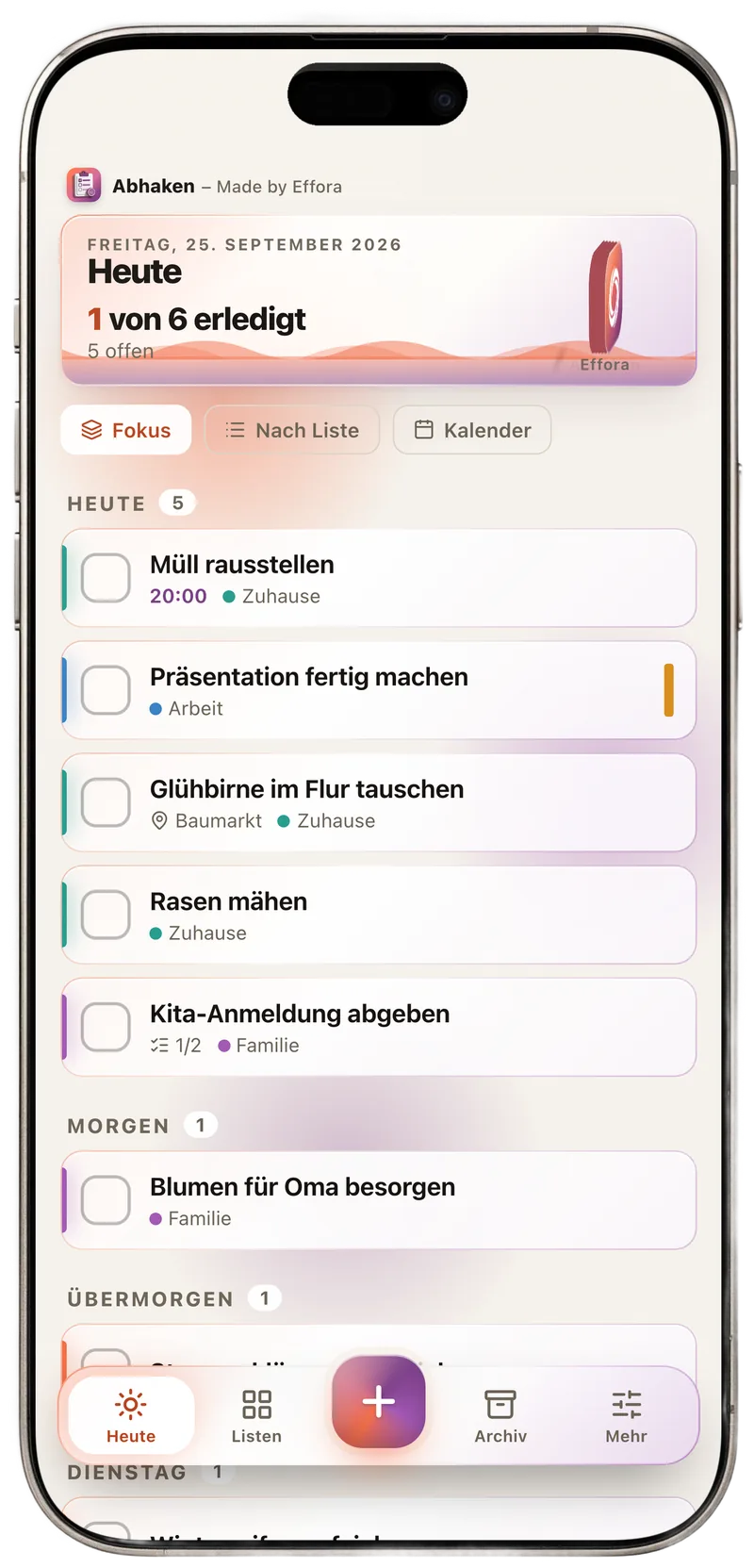
One list per area of life, such as home, work, family and shopping. Plus an inbox list for anything that comes to mind while you're out. Once a week, sort it into the right lists.
-
Get reminded at the right time or the right place
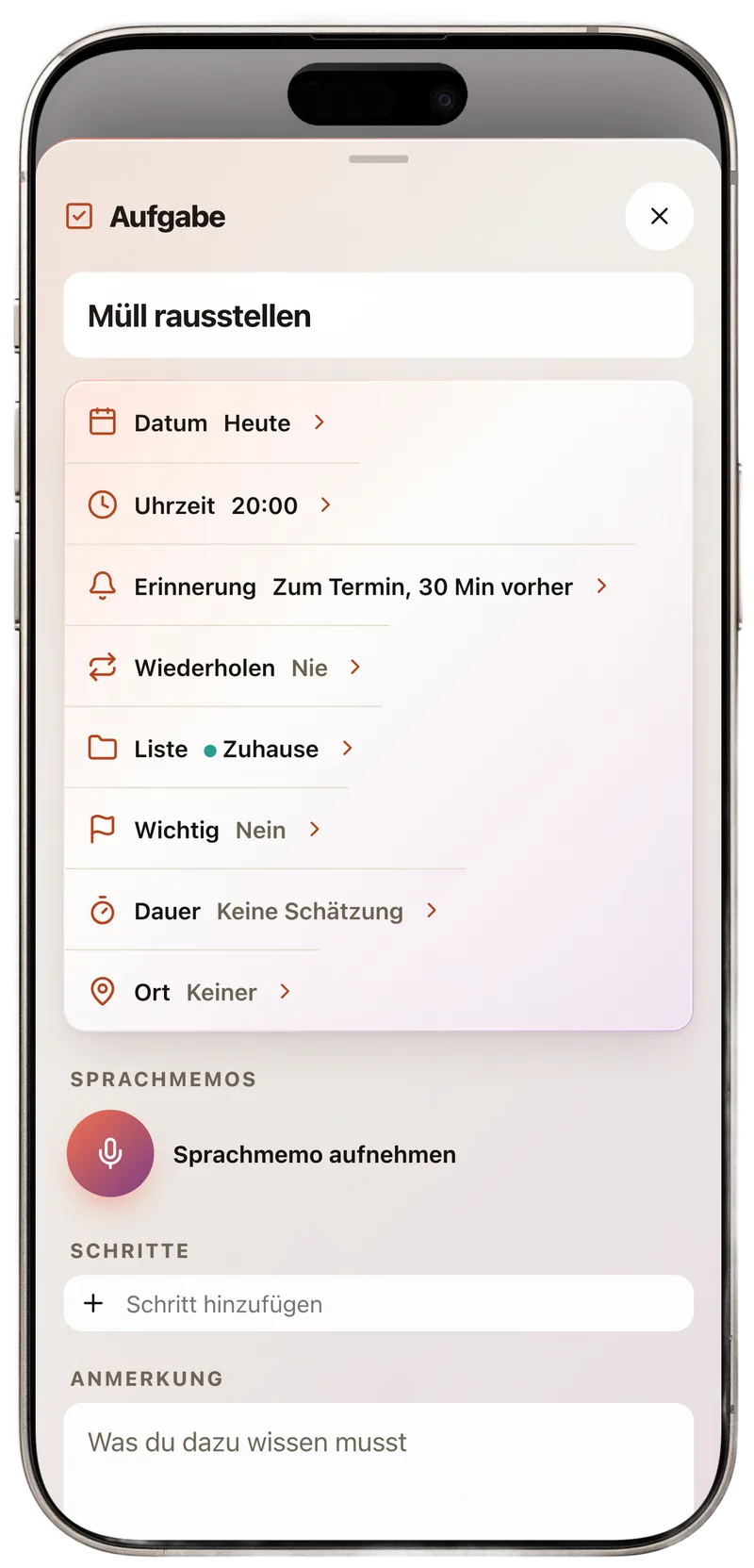
Tasks with a date get a reminder with some lead time, for example one day before. Tasks tied to a place, like taking letters to the post office, work best with a reminder right there.
Frequently asked questions
How many tasks should be on today's list?
Fewer than you think. A proven approach is to pick three important tasks and treat everything else as a bonus. A list you have finished by the evening is more motivating than twenty open items.
How do I write a good task?
Start with a verb and make it so specific that you know right away what to do. Instead of “taxes”, write “find last year's wage statement in the folder”. If a task doesn't fit into one sitting, break it down.
Paper or app?
Both work. Paper is quick and easy to scan. An app has the edge if you need reminders, want to link tasks to a place or a time, or want your list with you at all times.
What do I do with tasks I keep putting off?
Ask yourself why. Often the task is too big or too vague, and a smaller first step helps. Sometimes it just isn't important anymore. Then you are allowed to cross it off.
How often should I tidy up my list?
A quick look in the evening for the next day and a longer one once a week are usually enough. Cross off what's done, sort in what's new and set dates for anything with a deadline. For deadlines from official letters in Germany, see the guide Widerspruchsfrist (in German).
A list that speaks up
Abhaken is the to-do app by Effora. It reminds you at the right time or the right place and keeps nudging you until the task is really done.
- Reminders with advance notice and “remind again until checked off”
- Location reminders, when you arrive or leave
- Separate lists, focus on one task at a time, everything on your device with no account